How to grow kitchen herbs on a narrow windowsill
· Editorial team chicagonewsdaily7.com
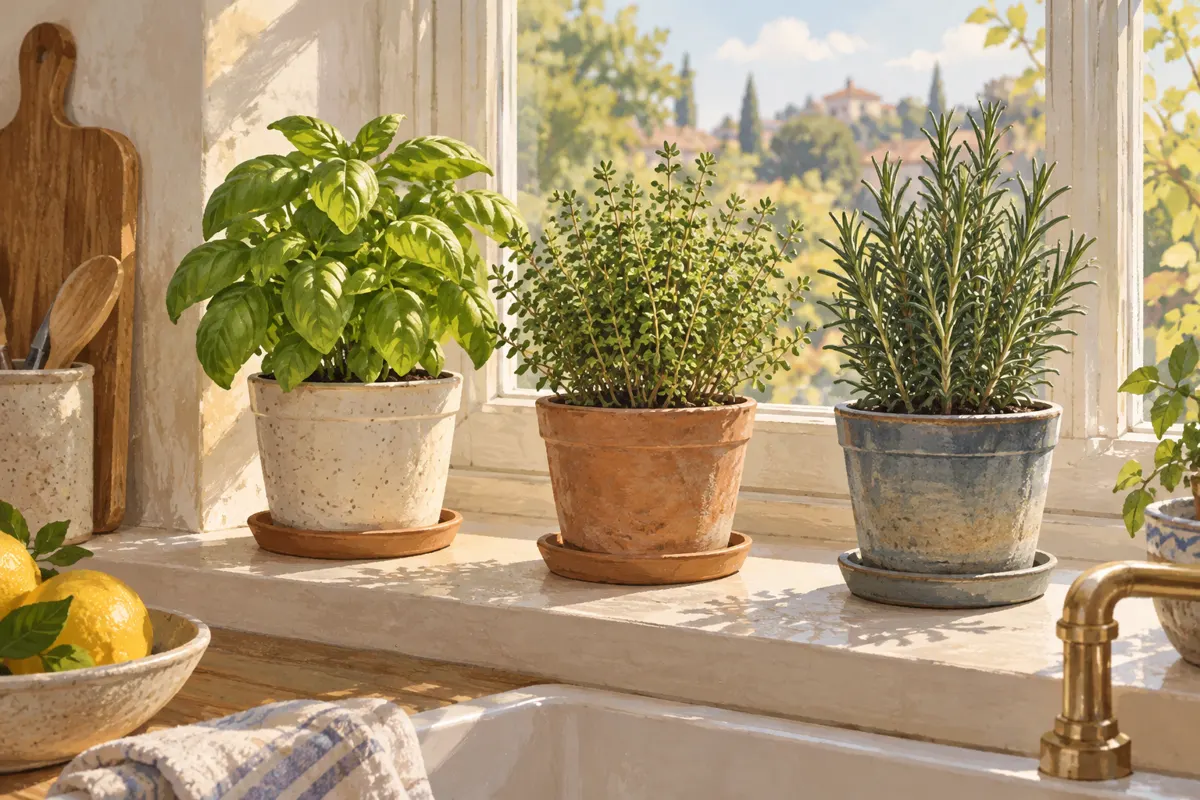
Grow herbs on a narrow windowsill by choosing a bright spot, using individual pots with drainage holes, and placing them on waterproof saucers that fit securely on the ledge. Start with two or three herbs you regularly cook with, leaving enough room to lift each pot for watering and turn it as it grows.
Check the light and measure the ledge
Watch the window through a normal day before buying plants. Note when direct sunlight reaches the sill and whether curtains, nearby buildings, or trees shade it. A south- or southwest-facing window is a useful starting point for sun-loving herbs; aim for about five to six hours of direct sun. A kitchen window is convenient, but a brighter window in another room may work better.
- Measure the usable depth and length of the sill, including space needed to open the window.
- Check the footprint of the saucers as well as the pots: both must sit securely on the ledge.
- Leave access to window handles and enough room to lift pots without catching neighboring stems.
- If daylight is insufficient, consider a small grow light positioned according to its instructions.
Choose a few herbs you will actually use
A narrow sill is easier to manage when you begin with a small selection. Young plants are a practical starting point if you want to begin harvesting sooner than you could from seed. Choose herbs for both your cooking habits and the light available.
- Chives suit frequent small harvests for eggs, salads, and garnishes. Give them a bright position and regular moisture.
- Basil needs a sunny spot and consistent watering. It is useful if you often cook with fresh leaves.
- Thyme suits a sunny sill and prefers a loose growing medium with less frequent watering than basil.
- Mint is an option for a partly shaded spot, but its spreading growth makes a separate pot useful.
An editorial proposal for a sunny sill is one pot each of chives, basil, and thyme. Keeping them separate lets you adjust watering individually. If that arrangement crowds the ledge, start with two plants.
Use draining pots and protect the sill
Choose containers with drainage holes and enough root space, rather than selecting the smallest pots simply because they fit. A depth of around six inches is a useful starting point for many herbs. If a suitable pot cannot sit securely on your sill, use a nearby stable surface instead.
- Choose a potting mix suited to the herb. Basil and chives favor nutrient-rich growing media; thyme and rosemary prefer a looser mix with fewer nutrients.
- Set each draining pot on a waterproof saucer, or place it inside a watertight outer container.
- Water where spills are easy to clean up, let excess water drain, and empty the saucer or outer container.
- Dry the container base before returning it to the sill, and check underneath regularly for trapped moisture.
Arrange pots for easy everyday care
An editorial proposal is to arrange the pots in a single accessible row, with a small gap between them. Avoid filling every inch: you need space for leaves to grow and for your hand to reach the soil. Position plants so a larger herb does not shade a smaller one, and keep the whole pot base supported.
Turn the pots regularly to encourage more even growth toward the light. As plants expand, reassess the arrangement. Repotting may mean moving one herb off the sill rather than squeezing a larger container into the same space. Keep the plants easy to remove so watering remains a simple task.
Check moisture and harvest small amounts
Check the soil with a finger before watering instead of watering every pot on the same schedule. Basil and chives need more consistent moisture, while thyme and rosemary prefer less frequent watering. Avoid leaving any pot standing in collected water. Feed according to the plant's needs and the fertilizer label, and inspect leaves and stems for pests during routine care.
Harvest modest amounts as the plants grow. Snip chive leaves near the base; cut basil stems just above a pair of leaves to encourage branching. Leave plenty of healthy growth after each harvest. A small windowsill garden is best treated as a source of occasional fresh additions to meals, with its size adjusted to the space and care you can provide.