How to keep roasted vegetables crisp instead of soggy
· Editorial team chicagonewsdaily7.com
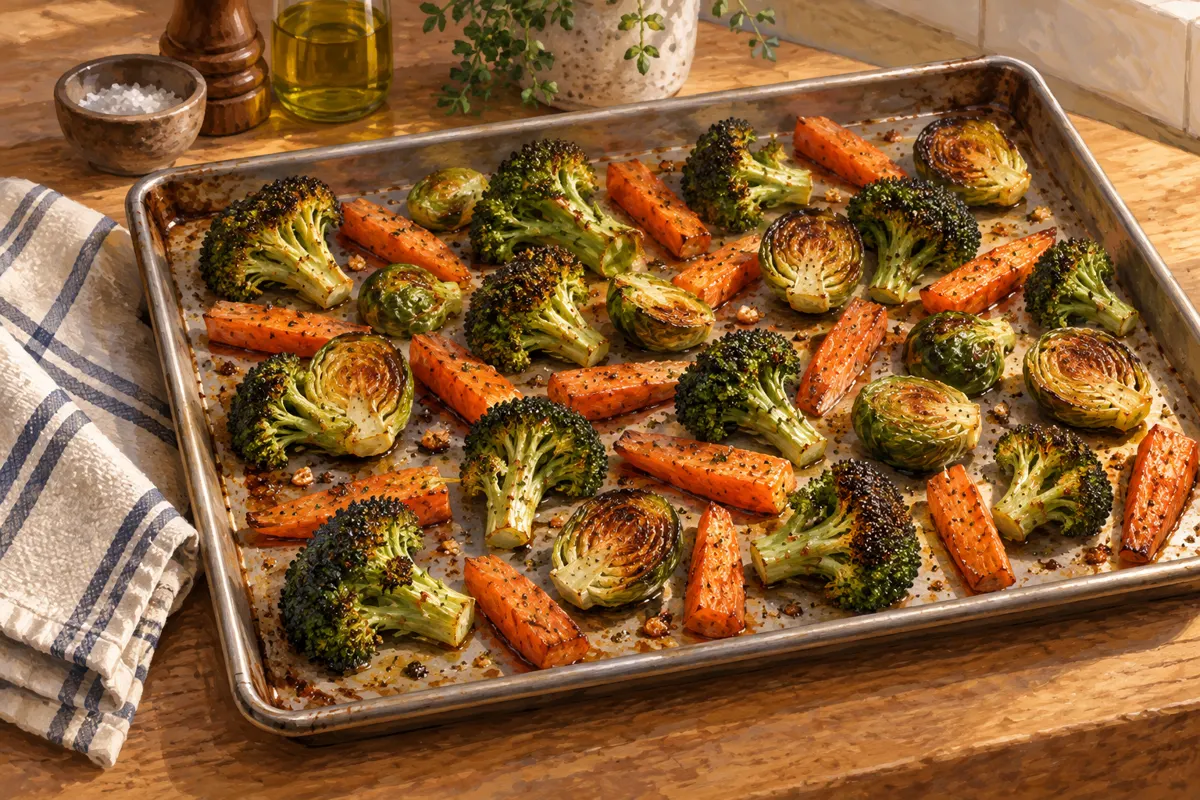
To keep roasted vegetables crisp, dry them thoroughly, cut similar vegetables into even pieces, coat lightly with oil and spread them in a single layer with space between them. Roast in a fully heated oven, and separate vegetables that cook at different speeds. These habits help you get browned edges and tender centers instead of a crowded pan of soft, steamed vegetables.
Dry the vegetables before adding oil
Water left from washing works against good roasting. Before seasoning, pat the vegetables as dry as possible with a clean kitchen towel or paper towels. Pay attention to broccoli and cauliflower florets, where droplets can remain tucked between branches. Washing is necessary; leaving that rinse water on the vegetables is avoidable.
Once dry, toss the pieces with enough oil to give them a thin, even sheen. There should be no puddle at the bottom of the bowl. Check the coating after tossing: some surfaces may still look dry while others are oily. Redistribute the oil before adding more, then season with salt, pepper or your preferred spices.
Cut pieces evenly within each vegetable
A tray of tiny fragments and large chunks is difficult to cook evenly. The smaller pieces can brown before the larger ones become tender. Aim for comparable thickness within each type of vegetable; the pieces do not need to look identical.
- Potatoes and sweet potatoes: cut into roughly 3/4-inch pieces for a manageable starting size.
- Carrots and parsnips: split thick sections lengthwise before cutting crosswise so the widest pieces are not much thicker than the rest.
- Brussels sprouts: halve them so each piece has a broad cut surface.
- Broccoli and cauliflower: keep florets similar in size and cut the dense stems into smaller pieces.
Even cutting does not make every vegetable cook at the same speed. A potato and a zucchini piece can be similar in size but still need different amounts of time. Use consistent cuts to control variation within an ingredient, then plan separately for differences between ingredients.
Give every piece room on the pan
Spread vegetables in one layer without overlapping, leaving visible gaps between pieces. A packed tray encourages steaming rather than browning. If you cannot spread everything out comfortably, use a second baking sheet or roast in batches. Extra cooking time cannot reliably compensate for an overcrowded pan.
When using two sheets, place them in the upper and lower thirds of the oven. About halfway through cooking, exchange their positions and rotate each sheet 180 degrees to help account for uneven heat. Keep the vegetables spread out when turning or rearranging them.
Match the heat and timing to the vegetables
Preheat the oven fully before putting in the tray. For a conventional oven, 425°F is a useful starting point from The Kitchn’s roasting guide. Begin checking unfamiliar vegetables after about 15 minutes, then judge by both tenderness and browning. A fork should enter easily, and the edges should have developed color.
At 425°F, broccoli, cauliflower and Brussels sprouts generally take about 15–25 minutes, while potatoes, carrots and beets often need 30–45 minutes. Zucchini and bell peppers may take only 10–20 minutes. Treat these as checking windows, since piece size affects cooking time.
- Use separate trays and remove each vegetable when it is ready, then combine for serving.
- Pair vegetables with similar cooking times, such as broccoli and cauliflower.
- Start slower vegetables first and add quicker ones later, provided the pan still has enough space.
Check the edges before serving
Tenderness alone does not mean roasting is finished. If the vegetables are cooked through but still pale, give them more time while watching for browning and removing pieces that are already done. Look for golden surfaces and toasted tips without letting thin edges burn. The goal is a tender interior with some crisp exterior texture.
- Pat washed vegetables dry.
- Cut each type into evenly sized pieces.
- Toss with oil and seasoning until evenly coated.
- Spread in a single layer with gaps between pieces.
- Roast in a preheated oven and remove each type when tender and browned.