How to organize takeout containers in one kitchen drawer
· Editorial team chicagonewsdaily7.com
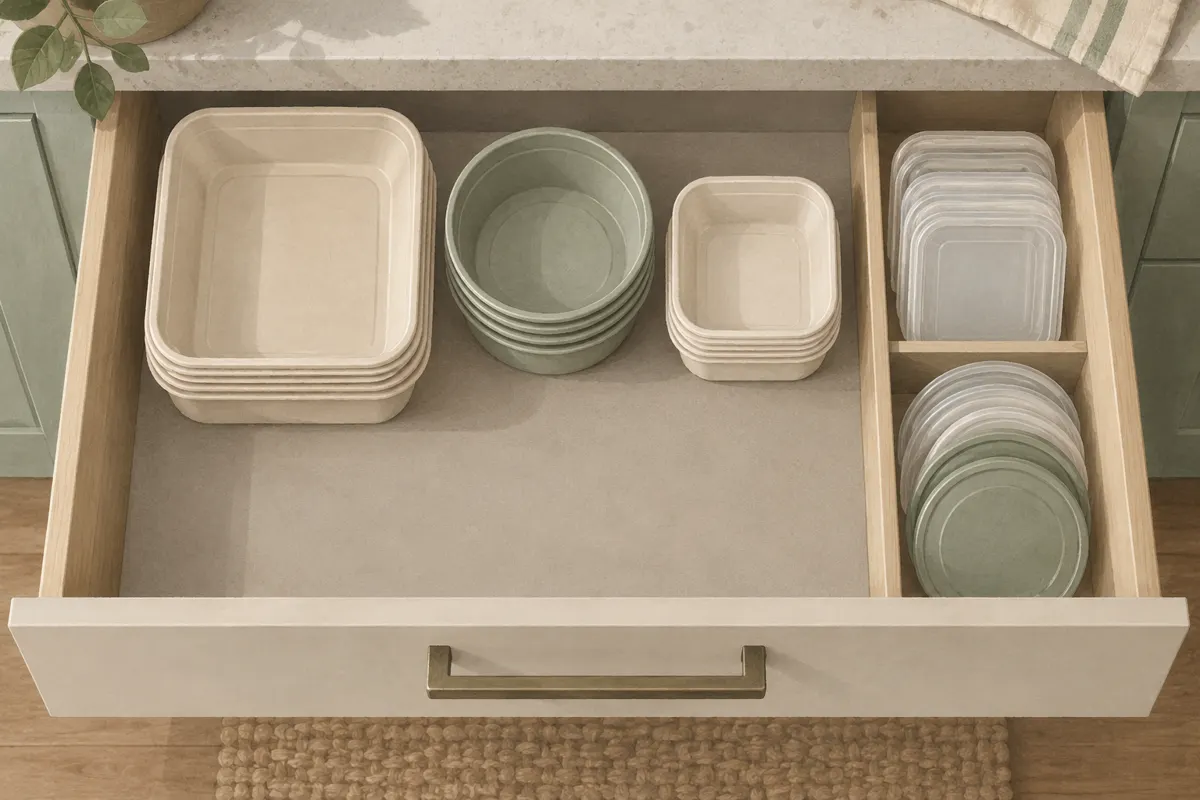
Keep takeout containers in one drawer by saving complete sets, nesting bases that fit comfortably together, and giving lids a separate space beside them. Set the limit at what you can retrieve and return easily with the drawer closed. The aim is a useful supply for leftovers, with room to put clean containers away.
Match every container before arranging the drawer
Empty the drawer onto a clear counter. Gather containers and lids from the drying rack, dishwasher, lunch bags, and other cupboards so you can sort the whole collection together. Keep each lid on its matching base during this first pass; similar shapes can hide differences in fit.
- Try each lid on a base and check that it closes properly.
- Separate complete sets from pieces that still need a match.
- Inspect for cracks, warping, or other damage, and follow the manufacturer’s guidance about suitability for continued use.
- After checking the usual places, remove unmatched pieces from the food-container drawer. Keep one elsewhere only if you have a specific use for it.
Takeout packaging varies. Check any available manufacturer’s instructions before treating a container as reusable food storage. A matching lid alone does not establish whether it suits your intended use.
Choose the sizes you actually reach for
Look at the complete sets and think about an ordinary week. Which ones hold your leftover dinner, lunch portion, or small amount of sauce? Give those sizes priority. Containers that repeatedly stay in the drawer should not crowd the ones you use.
A proposed starting approach is to choose your most useful container shape first, then add other sizes for distinct jobs. For example, keep a group for meal portions and a smaller group for leftover ingredients. Add a large container only if you regularly need it and it fits comfortably.
Avoid choosing a fixed count before seeing the available space. Your practical limit depends on the drawer, the container shapes, and how many sets are usually holding food. Include containers currently in use when deciding what belongs in the collection.
Nest bases in short, compatible groups
Measure the drawer’s usable width, depth, and closing clearance before adding an organizer. Then arrange empty bases without their lids. Nest pieces only when they fit comfortably and separate easily; forcing unlike shapes together creates a pile that is awkward to use.
- Keep round bases together and rectangular bases in another group when mixing them wastes space.
- Make stacks short enough to lift out without catching the drawer opening.
- Give a frequently used size its own position if it keeps getting buried.
- Put containers away clean and fully dry.
Try retrieving your usual lunch container. If you have to unload several unrelated pieces, shorten that stack or change its position. Repeat with the size you use for leftovers.
Give lids a visible space beside the bases
Use a small bin, clean box, or stable divider to keep lids together beside their matching bases. Upright storage works when the drawer is deep enough. Check the tallest lid before settling on the layout, and close the drawer gently to confirm clearance.
For a shallow drawer, a proposed alternative is to lay lids flat in small groups, separated by shape or container family. Keep each group easy to lift. Leave enough space around dividers to remove and return a lid without squeezing it into place.
Try what you already own before buying an organizer. One divider between bases and lids may be enough. If a daily lunch container is easier to manage with its lid attached, give that complete set a dedicated spot.
Set a capacity limit and keep it
The drawer is full when another set would make a stack awkward, hide lids, or interfere with closing. A proposed household rule is to keep a new takeout container only when it replaces a less useful complete set. Compare both before putting the newcomer away.
Leave space for containers currently holding food to return after washing. Otherwise, a drawer that looks tidy today can overflow as soon as the leftovers are gone. Show anyone who puts dishes away where each group belongs.
After a week of use, adjust any troublesome spot: a tipping stack, crowded lid section, or buried favorite size. Keep the arrangement simple enough that returning a dry base and lid takes no extra sorting.