How to pack a work lunch when there is no microwave
· Editorial team chicagonewsdaily7.com
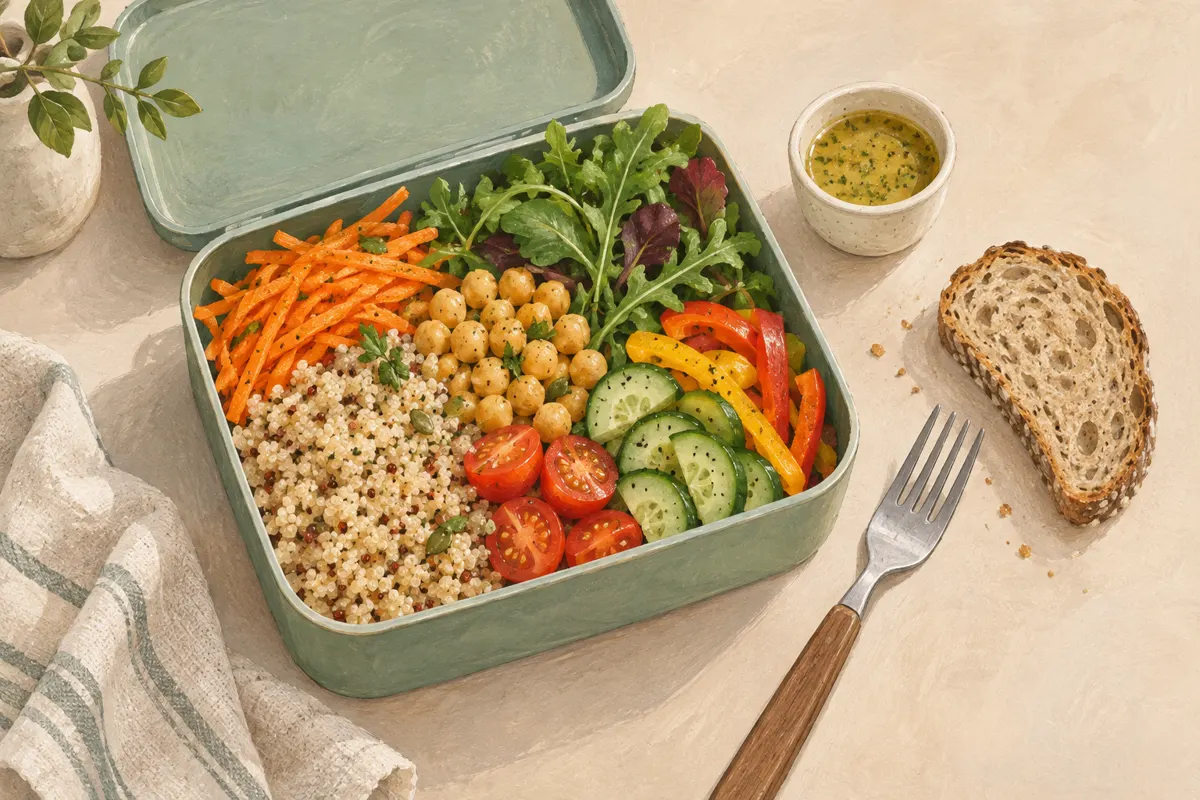
Pack a meal designed to be eaten cold: combine a grain or bread base with protein, vegetables and a dressing you add at lunchtime. Keep wet ingredients and crunchy extras separate, and plan how you will keep the food chilled. A grain bowl, pasta salad or simple lunch box can work without reheating.
Build lunch around four simple components
Start with the main meal rather than a collection of small snacks. Choose a base, add a protein source, include vegetables and finish with something that brings flavor. This gives you a repeatable way to use what is already in your kitchen.
- Base: cooked quinoa, bulgur, buckwheat, pasta, whole-grain bread or a tortilla.
- Protein: chickpeas, beans, tofu, cooked chicken, tuna, eggs or cheese.
- Vegetables: peppers, carrots, leafy greens or cooked vegetables you enjoy cold.
- Flavor: hummus, pesto, fresh herbs or an olive oil and lemon dressing.
Adjust the amount to your appetite. If a vegetable salad usually leaves you hungry, add beans and a grain, or pack bread alongside it. Keep the meal easy to eat during your break: bite-size ingredients and one fork are a practical starting point.
Choose a combination you will enjoy cold
The following are editorial proposals inspired by the supplied lunch ideas. Choose one as your starting point, then swap ingredients according to what you like and have available.
- Quinoa and chickpea bowl: pack cooked quinoa, drained chickpeas, roasted peppers and spinach. Carry hummus in a separate compartment.
- Pasta salad: combine cooked whole-grain pasta with cooked chicken or beans, peppers and basil. Add pesto when you eat.
- Bread-and-dip box: pack whole-grain bread, hummus, carrot sticks and a cooked egg, keeping the bread away from the dip.
- Bulgur vegetable bowl: use cooked bulgur, chickpeas, chopped peppers and fresh herbs, with lemon and olive oil dressing on the side.
For pasta salads, avoid overcooking the pasta so it retains some firmness. When using dinner leftovers, select individual components you enjoy cold and build a new combination around them.
Separate the ingredients that make lunch soggy
A small dressing container is useful for salads and grain bowls. Add the dressing just before eating, then mix thoroughly. Pack nuts, seeds or bread separately when you want them to retain their crunch.
- Keep sliced tomatoes and cucumbers separate from sandwich bread until lunchtime.
- Use compartments or small containers to keep dips away from dry ingredients.
- For wraps, use a modest amount of sauce and avoid crowding the tortilla with wet fillings.
- For a salad bowl, keep the dressing separate from the vegetables during transport.
You do not need a container for every ingredient. Focus on separating the parts most likely to soften something else. A main box, a small sauce pot and a separate bread container may be enough.
Plan cold storage as well as the meal
No microwave and no refrigerator are two different packing problems. A meal that tastes good cold still needs appropriate storage. Refrigerate prepared lunch at home, keep perishable ingredients chilled during transport and put the box in the workplace refrigerator when you arrive.
If there is no refrigerator, use an insulated lunch bag with frozen cold packs to keep the meal chilled until you eat. Do not plan to leave eggs, meat, dairy or a prepared grain bowl sitting on your desk all morning. Account for your commute and the wait before lunch when choosing your packing setup.
Use a short evening packing routine
This proposed routine keeps morning decisions simple. Reuse ingredients from dinner where convenient, and change one component or dressing when you want variety.
- Choose tomorrow’s base, protein and vegetables before clearing away dinner.
- Portion prepared ingredients into the main lunch container and refrigerate promptly.
- Put dressing or dip in a small sealed container; pack bread and crunchy toppings separately.
- Set out a fork, napkin and lunch bag so they are ready to collect.
- In the morning, transfer the chilled containers to your bag with cold packs as needed. At lunch, add the dressing and toppings.
Sources
- Lunchbox czyli szybki obiad w pracy - sprawdzone jadłospisy
- 5 pomysłów na jedzenie do pracy na zimno z wykorzystaniem pieczywa - Piekarnie Cukiernie Putka - najlepsze pieczywo i cukiernictwo. Warszawa
- Fit obiady do pracy: szybkie i łatwe przepisy na fit lunch do pracy na zimno i na ciepło - stylzycia.polki.pl
- Co na lunch w pracy? 15 pomysłów na smaczny posiłek