How to share dinner preparation with kids in a small kitchen
· Editorial team chicagonewsdaily7.com
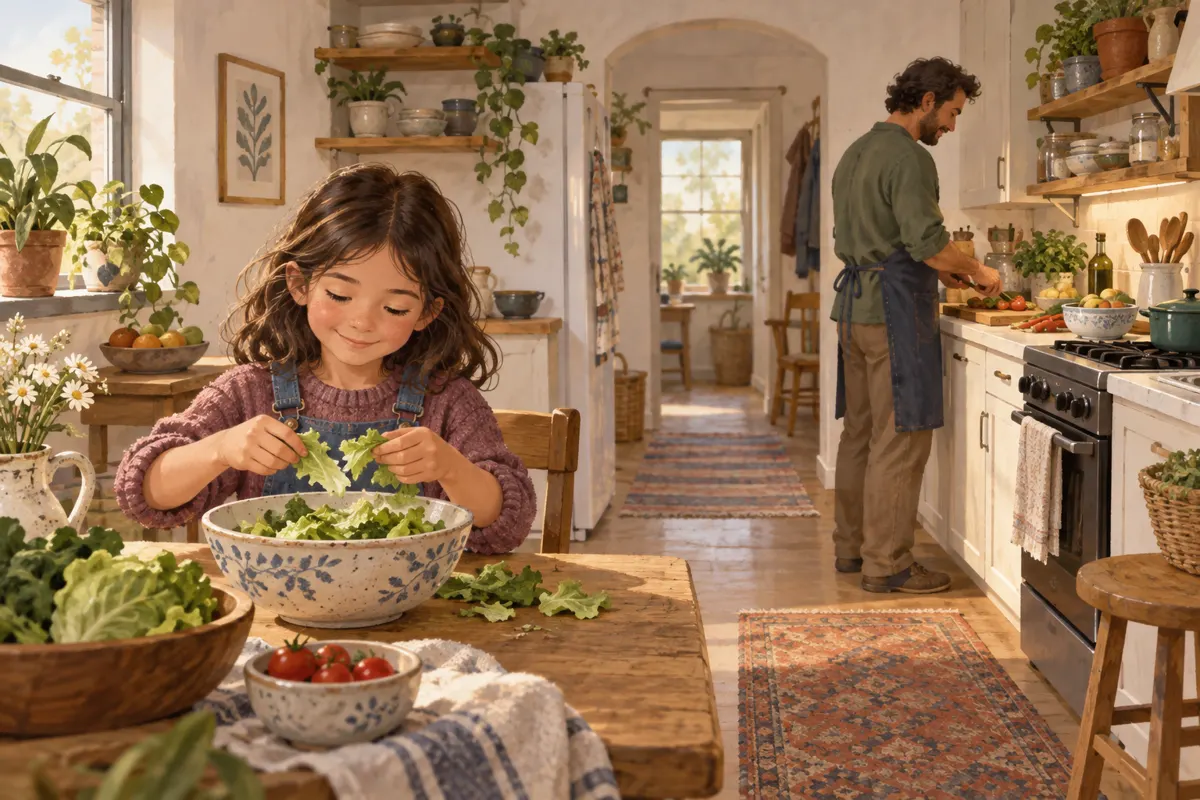
Give children a seated workspace with one manageable job while adults handle heat and sharp tools. Tearing lettuce, pouring premeasured ingredients and folding napkins all contribute to dinner without requiring everyone to crowd around the stove. Start with a small part of the meal, keep supplies within reach and add responsibility as your child becomes comfortable.
Make room for one seated helper
A practical setup proposal is to use one end of the dining table as the child’s preparation area. Choose a seat and surface they can comfortably use, where you can supervise them. Keep the route between the stove, sink and refrigerator clear. If the table is outside your sightline, save the shared task for a moment when you can sit together.
- Clear enough space for one bowl and the current ingredients.
- Use a sturdy bowl that stays in place during mixing.
- Give the child a spoon or other manageable tool.
- Keep a small container nearby for scraps.
- Bring over only what the child needs for this task.
Show the child where finished ingredients belong so they can complete the job without carrying bowls through a busy kitchen. Before starting, wash hands and explain the division of work: “You’ll make the salad here, and I’ll cook at the stove.”
Match the task to the child’s abilities
Age can guide your choice, but watch what your child can actually manage. Demonstrate once, then let them try while you supervise. A familiar, simple task is a useful starting point, especially when you are also getting the rest of dinner ready.
- Toddlers: tip a premeasured ingredient into a cool bowl, stir with help or place napkins at each setting.
- Preschoolers: tear washed lettuce, whisk a cool mixture or sprinkle an ingredient you have portioned out.
- Elementary-age children: measure ingredients, assemble sandwiches or count the spoons needed for dinner.
- Older children: read recipe steps aloud, organize ingredients or help plan a simple meal.
For this small-kitchen routine, keep knives, hot pans and cooking appliances with the adult. An older child can take more responsibility at the table by following a recipe or checking measurements. When a task proves difficult, simplify it: you fill the measuring cup, and they pour.
Build one child-sized job into dinner
Choose a job that belongs to the meal you already intend to make. Children can help with a salad, a cold topping or table setting while you manage the cooking. Expect the shared part to take longer, particularly when the task is new.
- The adult washes the lettuce, cuts any ingredients that need a knife and places them at the seated workspace.
- The child tears the lettuce into a bowl while the adult demonstrates the first few pieces.
- The child adds the prepared vegetables and mixes them with a spoon.
- An older child measures dressing ingredients; a younger child adds portions measured by the adult.
- The adult moves the finished salad to the serving area, and the child folds napkins.
With two children and limited room, a useful proposal is to take turns at the preparation seat. One handles the food task while the other folds napkins at the table. Switch roles on another evening so each child gets a chance to try both.
Give clear directions and small choices
Give one concrete instruction at a time: “Tear these leaves into the bowl.” Wait until that step is finished before introducing the next. For children who prefer a visible sequence, show the ingredients in order or use a simple picture of each step.
Offer two choices you can accommodate, such as stirring or adding ingredients. Let children notice smells, colors and textures without making tasting a condition of helping. A child who does not want to touch wet lettuce could measure another ingredient or arrange napkins instead.
Acknowledge the specific contribution: “You mixed the dressing and put out everyone’s napkin.” That gives the child a clear picture of how their work helped get dinner ready.
Finish with a manageable cleanup
Make cleanup part of the assigned job. A younger child can collect unused napkins or wipe their table space with help. An older child can put away ingredients or help load suitable items into the dishwasher. Adults should handle sharp tools and hot cookware.
On a rushed evening, reduce the job to one useful action: tear the lettuce or set out spoons. Keep the routine easy to repeat. Next time, begin with the task the child already knows and introduce another step when there is time to teach it.